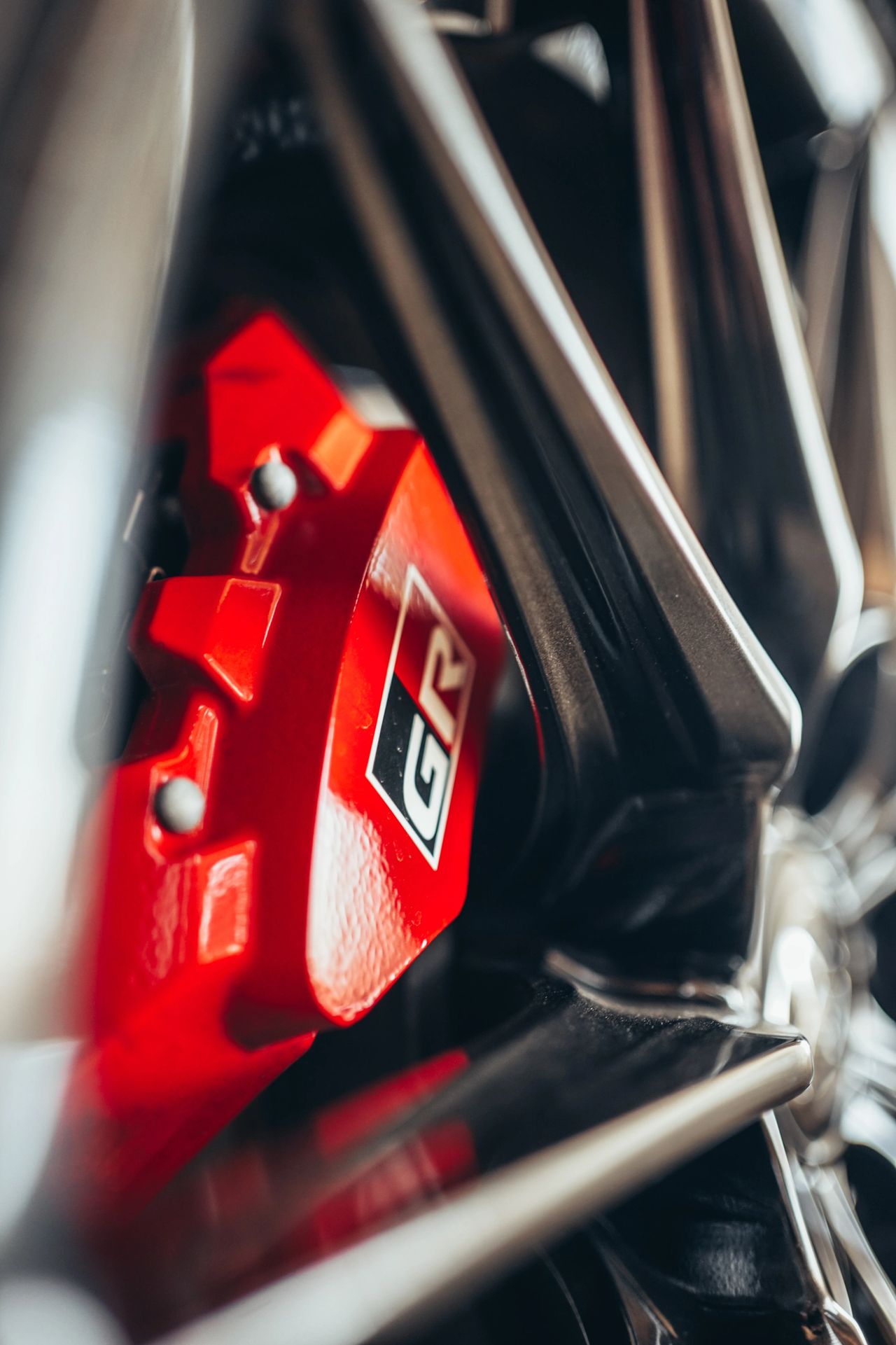
Each summer, families brave the heat to take road trips, go to barbeques, camping, or a trip to another city. Although all of these activities can be a lot of fun, they can also require a lot of time spent in the car. One of the most important, and most overlooked, components of vehicle safety and maintenance is the brake system. Keeping your brake system in tip-top shape can help you stay safer on the road and avoid costly repairs in the long run.
The typical brake system in a passenger vehicle consists of disc brakes on the front wheels and disc or drum brakes on the rear. When a driver depresses the brake pedal, a piston in the master cylinder forces the brake fluid through a series of metal lines, rubber hoses, and various valves to the brake assemblies located at each wheel. This causes the brakes to engage, stopping the vehicle. Over time, brake pads (disc brakes) and brake shoes (drum brakes) will wear out with normal use, requiring replacement.
It is recommended to have your brake system inspected and serviced according to your vehicle’s owner’s manual, or at the first sign of a problem. Here are some brake warning signs:
– The brake warning light comes on, which may indicate a potential loss of braking capability.
– There’s a high-pitched squeal or a metallic grinding noise when you depress the brake pedal.
– The brake pedal either feels mushy or requires extreme pressure when depressed.
– The vehicle pulls to one side while braking.
– The brakes vibrate or pulsate when applied.
If you experience any of these warning signs, you should have a certified technician inspect your brake system. These symptoms may indicate possible brake system issues, including worn brake pads or shoes, the air in the brake lines, leaking brake fluid, or warped brake rotors.
Before getting on the road this summer, take some time to make sure your vehicle is in proper working order.
ABS:
* An anti-lock braking system (ABS) is a safety anti-skid braking system used on aircraft and on land vehicles, such as cars, motorcycles, trucks, and buses.
* During hard braking, the ABS computer-controlled sensors electronically engage and release the brakes several times a second (which is faster than humanly possible). By engaging and releasing the brakes, the ABS prevents wheel lock-up and out-of-control skids.
* ABS will still work with your spare tire, but usually not as well, especially if your spare is a smaller tire.
* ABS decreases the chance of frontal collision on wet and dry roads.
* The system itself was initially used back in the 1950s, where it was applied as an anti-skid solution for aircraft. It first appeared in cars two decades later.
* The most straightforward way to tell if your car has ABS installed is to turn the key in the ignition until all the dashboard lights illuminate.
* There are four main components of ABS: wheel speed sensors, valves, a pump, and a controller.